

Drawing Time Art Therapy In Prisons And Other Correctional Settings
"The moment I committed my crime, I was set on a journey into the unknown. Having just turned twenty, I had to deal with a new way of being; my old life, identity and dreams were lost in the moment of my violent act...Arts in Corrections teaching artists encouraged me to express myself openly and created a safe space for all of us artists to work side by side no matter our skin color or background. Many of us learned to expose our inner thoughts, fears, and regrets through our art-unheard of in a place that rewards machismo and eats alive those thought to be weak and vulnerable." (an inmate cited in Brewster, 2012)
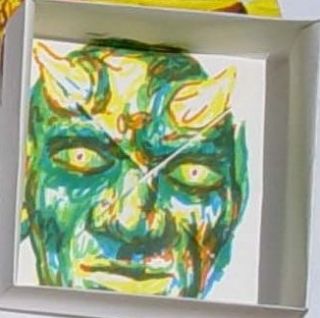
Inside the box
On the other hand, there seems to be a natural tendency for artistic and creative expression in prison settings (Kornfeld, 1997; Ursprung, 1997). This is evident in prison craft shops, murals, envelopes decorated and then bartered by talented inmates to send letters home, and of course intricately designed tattoos (Gussak and Ploumis-Devick, 2004). The inmates who create "good" art earn respect and friendship from others (Kornfeld, 1997).
While championed by the inmate hierarchy, there are other benefits to the art making process in prison. One study revealed the act of art making can decrease the number of disciplinary reports written on inmates who participated in an arts program (Brewster, 1983), and the California Department of Corrections (1987) revealed that recidivism decreased for those who participated in the state's Arts In Corrections program. Many programs recognize the benefits of the arts in prison settings and have since implemented them in their own institutions (Alexander, 2003; Bruna, 2007; Florida Department of State, 2005; Tannenbaum, 2000; Williams, 2003).
Art therapists should, and naturally do, take advantage of these benefits. In some cases, the inmate may not even know this is happening, but the therapist learns to wield these tools to direct him into a healthy and advantageous direction. Recent empirical studies have supported that art therapy is indeed effective in increasing mood, locus of control, socialization, and problem solving (Gussak, 2007, 2009). Most of these advantages focused on the art making process, considering the completed product as ancillary.
Thus, what has emerged over the years, are specific benefits art therapy offers behind the wire:
Art therapy:
- Catharts and sublimates aggression and violence (see previous post here)
- Promotes non-verbal communication, even while the inmate does not want to talk about his feelings and ideas which might leave him vulnerable. The environment is dangerous, and any unintended disclosure can be threatening.
- Can bypass defenses, including dishonesty.
- Provides necessary diversion and emotional escape.
- Permits the inmate to express himself in a manner acceptable to both the prison and outside culture.
- Reestablishes an identity above that of the inmate
- Works despite organicity, a low educational level, illiteracy, and other obstacles to verbal communication and cognitive development (Gussak & Cohen-Liebman, 2001; Gussak & Virshup, 1997).
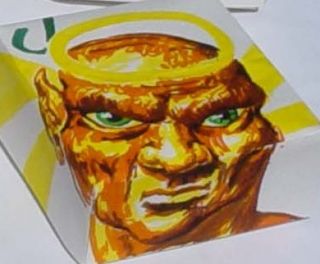
Outside the box
"Prison art is an expression of the human spirit and imagination, just as barbed wire, gun towers, and steel bars serve as daily reminders of lost freedom, privacy and human dignity." -Brewster
References
Alexander, B. (2003). Smitty, prayer, astronomy, "Y2K and the wicked stepmother," and Asia Romero: dimensions in the work of the prison creative arts project. In R.M.C. Williams (Ed.), Teaching the art behind bars (pp. 125-137). Boston, MA: Northeastern University Press.
Brewster, L. (Ed.) (2012)Paths of discovery: Art practice and its impact in California prisons. San Francisco, CA: CreateSpace Independent Publishing Platform
Brewster, L.G. (1983). An evaluation of the arts-in-corrections program of the California Department of Corrections. San Jose, CA: San Jose State University.
- What Is Therapy?
- Find a therapist near me
Bruna, Krista (2007). Creating Behind the Razor Wire: An Overview of Arts in Corrections in the U.S., January 2007. Retrieved from: http://www.communityarts.net/readingroom/archivefiles/2007/01/creating_behind.php#_ftnref4
Florida Department of State (2005). Culture Builds Florida's Future Strategic Plan
Gussak, D. (2013). Art therapy in the prison subculture: Maintaining boundaries while breaking barriers. In P. Howie, S. Prasad & J. Kristel (eds.) Using Art Therapy with Diverse Populations: Crossing Cultures and Abilities. (pp.328-337).London: Jessica Kingsley, Publishers.
Gussak, D. (2009). The effects of art therapy on male and female inmates: Advancing the research base. The Arts In Psychotherapy, 36 (1), 5–12.
Therapy Essential Reads
Gussak, D. (2007). The effectiveness of art therapy in reducing depression in prison populations. International Journal of Offender Therapy and Comparative Criminology, 5(4), 444-460
Gussak, D. & Cohen-Liebman, M. S. (2001). Investigation vs. intervention: Forensic art therapy and art therapy in forensic settings. The American Journal of Art Therapy, 40(2), 123-135.
Gussak, D. & Ploumis-Devick, E. (2004). Creating wellness in forensic populations through the arts: A proposed interdisciplinary model. Visual Arts Research 29(1),35-43.
Gussak, D. & Virshup E. (eds.). (1997) Drawing Time: Art Therapy In Prisons And Other Correctional Settings, Chicago, IL: Magnolia Street Publishers.
Kornfeld, P. (1997). Cellblock visions: Prison art in America. Princeton, NJ: Princeton University Press.
Tannenbaum, J. (2000). Disguised as a poem: My years teaching poetry at San Quentin. Boston, MA: Northeastern University Press.
Ursprung, W. (1997). Insider art: The creative ingenuity of the incarcerated artist. In D. Gussak and E. Virshup (Eds.), Drawing Time: Art Therapy In Prisons and Other Correctional Settings (pp. 13-24).Chicago, IL: Magnolia Street Publishers.
Williams, R.M.C. (2003). Introduction. In R.M.C. Williams (Ed.), Teaching the art behind bars (pp. 3-13). Boston, MA: Northeastern University Press.
Drawing Time Art Therapy In Prisons And Other Correctional Settings
Source: https://www.psychologytoday.com/us/blog/art-trial/201310/art-behind-bars
Posted by: osbornbelive1950.blogspot.com
0 Response to "Drawing Time Art Therapy In Prisons And Other Correctional Settings"
Post a Comment