

How To Create Your Own Animal Species
9 New Species of Animals You Didn't Know Existed
Scientists estimate our beautiful planet has about 8.7 million species of animals, plants, fungi, protozoa, and micro-organisms, but the majority of them haven't even been identified yet, reports the According to PLOS Biology Journal. Scientists are discovering species all the time. Here are some of the more recent discoveries.
 Courtesy Andrew Walmsley
Tapanuli orangutan
Up until recently, there have been six known living species of great apes: eastern and western gorillas, chimpanzees, bonobos, and the Sumatran and Bornean orangutans. Thanks to a team of international researchers, there are now seven. The Tapanuli orangutan has been discovered in North Sumatra districts of South Tapanuli, hence the name. "Researchers believe only 800 remain and are under threat from loss of habitat and hunting," says Dan Ashe, president and CEO of the Association of Zoos and Aquariums. Their habitat is spread out over 250,000 acres, but the majority of the population likes to hang out in primary forest areas. They are similar in size to other orangutans, with males around five feet tall and females around four feet tall.
 Courtesy andrewmsnyder.com
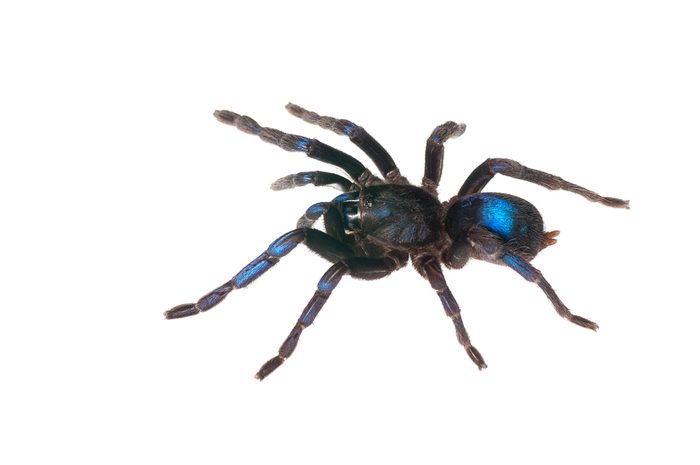
Blue tarantula
Even if you're not a fan of spiders, you have to be impressed with this beauty discovered by Andrew Snyder, a herpetologist for the Biodiversity Assessment Team expedition to the Potaro Plateau in Guyana, a joint conservation research team through Global Wildlife Conservation and World Wildlife Fund-Guianas. "A group of blue tarantulas was discovered living in holes in a rotten stump in the Guyana rainforest," says Ashe. The cobalt blue forelimbs caught the eye of Snyder, who discovered many other blue tarantulas that night in the same stump while exploring. More research needs to be done before a formal description is made, but this is a step in the right direction for invertebrate conservation in Guyana.
 Courtesy Dr. Nicholas Kerhoulas, Humboldt State University
Flying squirrel
Flying squirrels aren't new, but scientists recently found a new species."The discovery of the Humboldt's flying squirrel in the Pacific Coast increased the number of species of flying squirrel from two to three," says Ashe. We already have the northern flying and southern flying squirrel, but Humboldt's flying squirrel (named after the naturalist Alexander von Humboldt) is now part of the family with its habitat along the Pacific coast of North America from southern California to southern British Columbia. Here's the inside scoop: Flying squirrels don't actually fly; they glide and can cover up to 150 feet with impressive precision on their targets. Don't miss these other animals with unusual superpowers.
 Courtesy ©️Dr. Edward E. Louis Jr., madagascarpartnership.org
Groves' dwarf lemur
This little lemur is irresistibly cute with its big round eyes and little stubby ears. "This tiny species of lemur is smaller than a North American squirrel. It was officially distinguished as a new species and named by scientists at the Omaha Henry Doorly Zoo's conservation genetics lab. The zoo has found 24 out of 113 lemur species," says Ashe. The Grove's dwarf lemur is only around six inches long and was found in Andringitra and Ranomafana, two national parks in Madagascar. Check out these 10 other interesting animal distinctions you probably didn't know about.
 Courtesy Sunbin Huang and Mingyi Tian
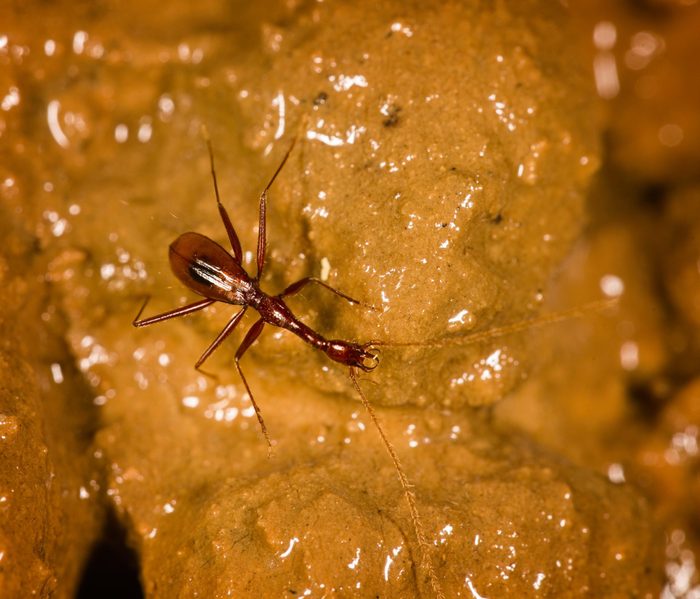
Cave beetle
The Xuedytes bellus (yes, bellus meaning beautiful) really is quite striking…for a beetle. This new species was found in a cave in Du'an, Guangxi Province, China, and it is tiny, just under a half inch in length. It looks as if it could be a supermodel of the beetle world with its sleek, elongated head and body.
 Courtesy Cédric d'Udekem d'Acoz
Amphipod
It's not a stretch that this new species of amphipod, the Empimeria Quasimodo, was named after the protagonist Quasimodo from the Victor Hugo novel, The Hunchback of Notre-Dame. Of course, this creature is very small in comparison to the fictional character—just two inches long—but the hunchback characteristic can't be denied. These vibrantly colored crustaceans were discovered in the Antartic Ocean circulating in the south of the Polar Front. Read up on these 7 animals that can basically live forever.
 Courtesy ©C. von Beeren
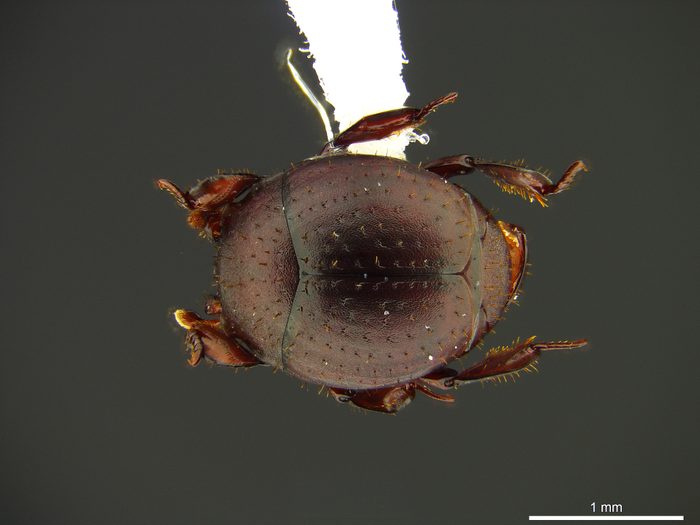
Baffling Beetle
When the baffling beetle (Nymphister kronaueri)—named in honor of Daniel Kronauer, field biologist and student of army ants—wants to catch a ride, it Ubers it on an army ant, specifically, the Eciton mexicanum ant. The baffling beetle is at the mercy of this army ant, as ants are nomads and don't stay in one place more than a couple of weeks. The baffling beetle can do its own thing and eat on its own, then once the colony of ants is on the move, the beetle uses its mouthparts to grab the ants' abdomen. How does the army ant put up with this? The beetle puts out signals via chemicals or other adaptations to avoid becoming the ant's meal. Scientists don't know how these chemical signals work exactly, but it certainly makes traveling easy for the baffling beetle in Costa Rica, where it was discovered.
 Courtesy Mackenzie Gerringer, University of Washington. ©Schmidt Ocean Institute
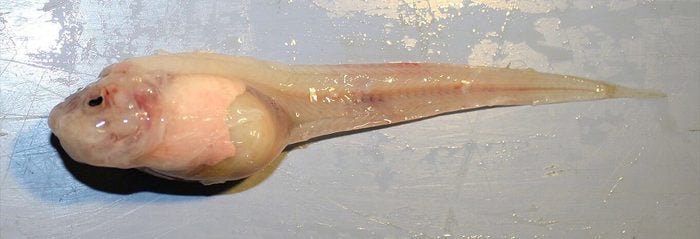
Swire's Snailfish
Found in the dark abyss of the western Pacific Ocean, the Swire's Snailfish (Pseudoliparis swirei) was discovered in the Mariana Trench and named after one of the officers of the HMS Challenger mission that discovered Mariana Trench way back in 1875. This tadpole-like fish came close enough for scientists to record on camera with the help of some traps baited with mackerel. It's just over four inches long, but scientists think it's one of the top predators in this part of the deep sea—and we're talking pretty deep—between 22,000 and 26,000 feet. Here are more rare photos of ocean invertebrates.
 Courtesy Tyrone Lavery, tyronelavery.wordpress.com
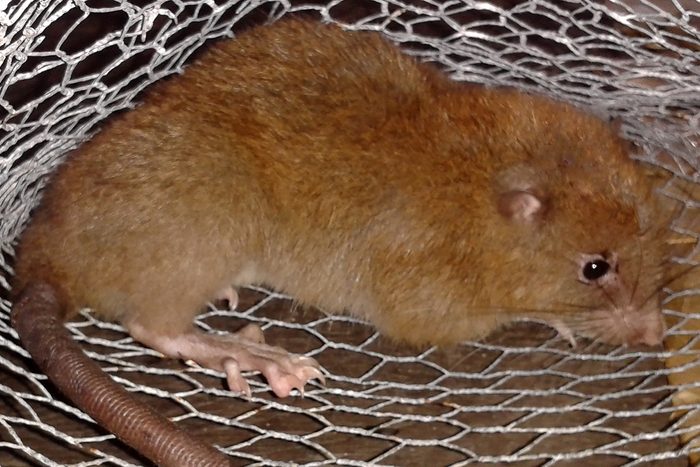
Vika
If you live in a large city, it's not uncommon to have rats as "neighbors," so you might not be especially excited at this discovery, but it's kind of big deal. "This rodent was found on the Solomon Islands, making it the first new rodent found there in more than 80 years," says Ashe. The vika is a big rodent; the one found measured 18 inches long, yet despite its size, it's believed to be critically endangered, says Ashe. The vika pictured here actually fell when a tree was being cut by a logging company, a probable factor in the Vika's declining numbers. But unlike city rats that can be seen dumpster diving in the alley, vikas are rare and mysterious and hang out in trees using their broad feet to navigate the branches. Next, read up on these 10 animals you didn't know went extinct.
Originally Published: January 15, 2019
Sign up for articles sent right to your inbox
Enjoy the best stories, advice & jokes delivered right to your inbox!

Subscribe & SAVE Save Up To 84%!
How To Create Your Own Animal Species
Source: https://www.rd.com/list/new-animal-species-didnt-know-existed/
Posted by: osbornbelive1950.blogspot.com
0 Response to "How To Create Your Own Animal Species"
Post a Comment